1908 – 1989

Herbert von Karajan

A life in music, told from the end to the beginning

Scroll back through the years

From the last concert in Vienna back to a childhood in Salzburg: the milestones of Herbert von Karajan's career, with photographs from the Karajan Archive and links to the concerts and recordings in its database.

from 1990

The legacy

Karajan left more than 800 recordings and some 300 films, and the institutions he founded still carry his name: the Salzburg Easter Festival, the Whitsun Festival, the Berliner Philharmoniker's academy, a foundation and a conducting competition. His archive is kept in Salzburg, where his life began.

Herbert von Karajan, undated. · Gabriela Brandenstein / Karajan-Archiv
2017
May·Berlin

The Orchestra Academy becomes the Karajan-Akademie

The training academy Karajan founded for the Berliner Philharmoniker in 1972 is renamed the Karajan-Akademie. Young musicians study there with members of the orchestra; many of them later join its ranks. The Salzburg Festival's Young Conductors Award (since 2010) and the Easter Festival's Karajan Prize (since 2015) continue the work of his foundation.

Karajan-Akademie of the Berliner Philharmoniker

2008
April 5·Salzburg

The centenary year

A hundred years after his birth, the Institute coordinates a worldwide "Karajan Year" with exhibitions, concerts and new editions of his recordings. Since 2007 the archive in Salzburg has been open to researchers, and its databases of concerts, recordings and photographs are the foundation of this site.

2005
December 1·Salzburg

Eliette von Karajan founds the Karajan Institute

As successor to the Herbert von Karajan Centrum she had opened in Vienna in 1995, Eliette von Karajan establishes the not-for-profit Eliette and Herbert von Karajan Institute in Salzburg. It preserves and presents his artistic estate, supports music education and researches the effects of music. In 2006 the Karajan Archive moves from Vienna to Salzburg.

About the Karajan Institute

Eliette von Karajan in her studio in Anif, 1989. · Gabriela Brandenstein / Karajan-Archiv

1978 – 1989

The late years

Illness marks the last decade: a stroke, spinal operations, a conductor who now works seated. Yet these are also the years of the compact disc, of his own film company, of the Vatican mass and the Vienna New Year's Concert, and of a late, deepening partnership with the Wiener Philharmoniker. The story ends in Anif, a few kilometres from where it began.

At a rehearsal in Berlin, 1987. · Emil Perauer / Karajan-Archiv
1989
July 16·Anif near Salzburg

Death in Anif

Herbert von Karajan dies of heart failure at his house in Anif, aged 81, during a meeting with Sony president Norio Ohga. The day before he had rehearsed Verdi's Un ballo in maschera, the production that was to open the Salzburg Festival; it is taken over by Georg Solti. He is buried the next day in the churchyard of Anif, without public ceremony.

The last photograph, 1989. · Siegfried Lauterwasser / Karajan-Archiv
April 23·Vienna, Musikverein

The last concert: Bruckner's Seventh

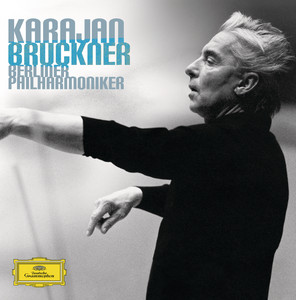
In the Golden Hall of the Musikverein Karajan conducts the Wiener Philharmoniker in Bruckner's Seventh Symphony, his final public appearance. The studio recording of the work made in the same hall that week is his last. The next day, in a letter to the Berlin Senate, he resigns after 34 years as artistic director of the Berliner Philharmoniker, citing his health.

At his last recording session in the Musikverein, 20 April 1989. · Siegfried Lauterwasser / Karajan-Archiv
In the auditorium of the Musikverein, 1989. · Siegfried Lauterwasser / Karajan-Archiv
March 24·Salzburg, Großes Festspielhaus

Farewell to the Easter Festival and to Berlin

Puccini's Tosca, revived with Luciano Pavarotti, is the last opera Karajan conducts at his Easter Festival. Three days later Verdi's Requiem in the Großes Festspielhaus is his last concert with the Berliner Philharmoniker. In February he had appeared for the last time in New York, with the Wiener Philharmoniker in Carnegie Hall.

Herbert and Eliette von Karajan during the Tosca rehearsals, Easter 1989. · Siegfried Lauterwasser / Karajan-Archiv
Rehearsing Tosca with Josephine Barstow, 1989. · Siegfried Lauterwasser / Karajan-Archiv
1988
December 31·Berlin, Philharmonie

The last concert in Berlin

On New Year's Eve Karajan conducts his last concert in the Philharmonie, with Yevgeny Kissin in Tchaikovsky's First Piano Concerto. In the autumn he had filmed Bruckner's Eighth with the Wiener Philharmoniker in Vienna, and in May given his last concerts in Japan, the country that had revered him since 1954.

April 5·Salzburg

Eightieth birthday, last Salzburg summer

Salzburg honours him with a ceremony in the Großes Festspielhaus; Deutsche Grammophon publishes "100 Masterworks" in its Karajan Edition. In August he resigns from the Salzburg Festival directorate after 24 years, though he has already agreed to stage Un ballo in maschera in 1989. Brahms's German Requiem on 28 August is his last appearance at the summer festival.

With his daughter Arabel on his 80th birthday. · Siegfried Lauterwasser / Karajan-Archiv
With Eliette and Arabel at the ceremony in the Festspielhaus, 1988. · Siegfried Lauterwasser / Karajan-Archiv
1987
January 1·Vienna, Musikverein

The New Year's Concert

For the first and only time Karajan conducts the Wiener Philharmoniker's New Year's Concert, broadcast around the world. Kathleen Battle sings "Frühlingsstimmen", the only vocal soloist the concert has ever had. The recording becomes one of the best-selling classical records. In April he opens Berlin's 750th anniversary celebrations with the Philharmoniker.

With Kathleen Battle and the Wiener Philharmoniker, New Year's Concert 1987. · Siegfried Lauterwasser / Karajan-Archiv
1986
June·Athen

Onassis Foundation Olympic Prize

In Athens, Karajan was presented with the "Olympic Prize" from the Onassis Foundation, the proceeds of which went to support young artists.

1985
December 31·Berlin, Philharmonie

Thirty years with the Berliner Philharmoniker

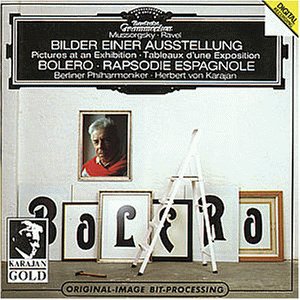
In December the orchestra celebrates thirty years under Karajan with Debussy and Ravel. The New Year's Eve concert with Ravel's Boléro, filmed by his company Telemondial, closes the year; Karajan recorded the work three times, always with the Berliners. In the autumn he had been ill again for months.

June 29·Rome, St Peter's Basilica

Mozart's Coronation Mass before the Pope

On the feast of Saints Peter and Paul, Karajan conducts Mozart's Coronation Mass with the Wiener Philharmoniker and the Wiener Singverein during a pontifical mass celebrated by John Paul II; he had proposed the idea during the Pope's visit to Austria. Telemondial records the mass, which is broadcast worldwide. At Easter he had conducted only Carmen and one concert, leaving the rest of the festival to Klaus Tennstedt; from now on a guest conductor always shares the Easter programme.

Conducting the Coronation Mass in St Peter's, 29 June 1985. · Emil Perauer / Karajan-Archiv
With Pope John Paul II after the mass. · Emil Perauer / Karajan-Archiv
Rehearsing Carmen at the Easter Festival, 1985. · Emil Perauer / Karajan-Archiv
1984
September 29·Berlin, Philharmonie

Reconciliation with the orchestra

The dispute over the clarinettist Sabine Meyer had escalated: at Whitsun Karajan replaced the Berliners with the Wiener Philharmoniker, and the Berliners in turn stayed away from the summer festival. After a clearing-the-air meeting he opens the Berliner Festwochen with Bach's Mass in B minor. The year also brings the last digital Beethoven cycle, his fourth, and the Four Seasons with Anne-Sophie Mutter.

Recording Vivaldi's Four Seasons with Anne-Sophie Mutter, Vienna 1984. · Siegfried Lauterwasser / Karajan-Archiv
1983
April 5·Salzburg

Seventy-five, after spinal surgery

Only months after an operation on his spine, Karajan rehearses Der Rosenkavalier for the summer festival wearing a neck brace; from now on he conducts seated or holding a rail. He receives the German Record Prize, UNESCO's International Music Prize and the Gold Medal of the Royal Philharmonic Society, and founds Télémondial in Monaco to film his repertoire under his own control.

Rehearsing Der Rosenkavalier in a neck brace, 1983. · Emil Perauer / Karajan-Archiv
In the recording studio in the Philharmonie, filming Beethoven's Sixth, 1983. · Emil Perauer / Karajan-Archiv
1982
December·Berlin

The Sabine Meyer affair

Karajan engages the 23-year-old clarinettist Sabine Meyer for the Berliner Philharmoniker; at the end of her probation the players vote overwhelmingly against her. The quarrel, public from January 1983, becomes a two-year rift between conductor and orchestra. In the same year his live Mahler Ninth, recorded in the Philharmonie, wins the Gramophone Award.

With Eliette, listening to a recording, 1982. · Siegfried Lauterwasser / Karajan-Archiv
1981
April 15·Salzburg

The compact disc is presented to the world

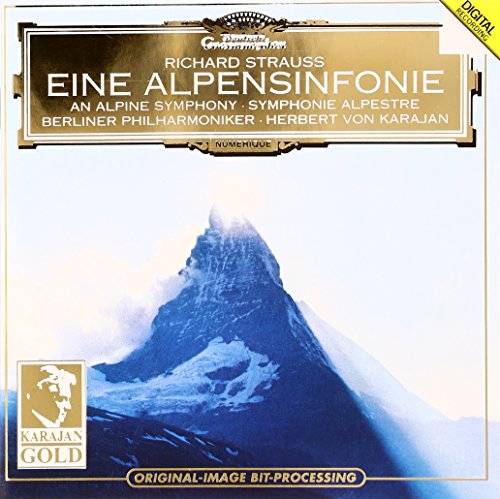
During the Easter Festival, at Karajan's invitation, Sony's Akio Morita and Norio Ohga and Philips present the Compact Disc Digital Audio System to the press. Karajan, an early champion of digital recording, declares that everything else is "gaslight". Richard Strauss's Alpine Symphony, which he had recorded digitally with the Berliners in December 1980, becomes the first classical title on CD. That summer he sails his maxi yacht Helisara to third place in the world championship off Sardinia.

With Sony chairman Akio Morita at the presentation of the compact disc, Salzburg 1981. · Siegfried Lauterwasser / Karajan-Archiv
At the helm of the Helisara VI, 1981. · Emil Perauer / Karajan-Archiv
With the trophy for third place at the Maxi Yacht World Championship, 1981. · Emil Perauer / Karajan-Archiv
1980
December 7·Berlin

Twenty-five years in Berlin, the first digital recordings

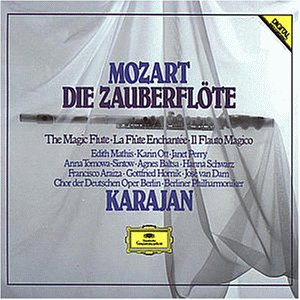
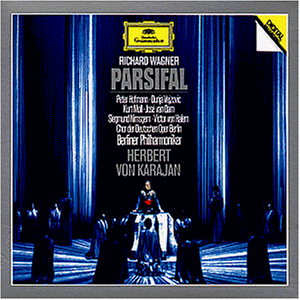
Berlin celebrates Karajan's 25th anniversary as chief conductor. In the studio he adopts digital recording with Mozart's Die Zauberflöte and Wagner's Parsifal, and in December the Alpine Symphony. His first appearance in Beijing with the orchestra had come in the autumn of 1979, during a tour of Japan and China.

With Eliette, listening to the Falstaff recording, 1980. · Siegfried Lauterwasser / Karajan-Archiv
Sailing with Eliette and Isabel, 1980. · Emil Perauer / Karajan-Archiv
1979
April·Salzburg

Don Carlo at Easter

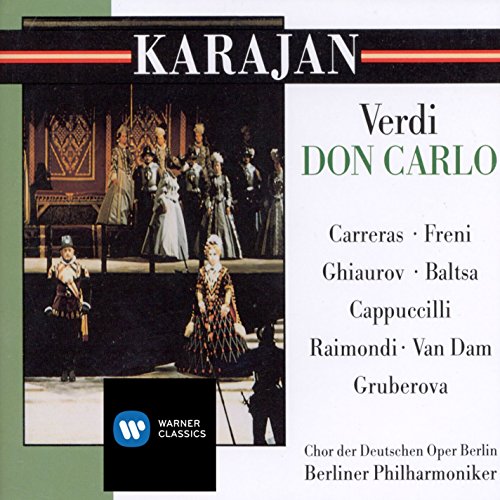
Karajan's own staging of Verdi's Don Carlo, first seen at the summer festival in 1975, comes to the Easter Festival with Mirella Freni, Agnes Baltsa, José Carreras and Nicolai Ghiaurov; he had recorded it with the same cast in Berlin the previous autumn. In the summer he films Bruckner's Eighth with the Wiener Philharmoniker in the abbey church of St Florian.

Rehearsing Don Carlo with the Berliner Philharmoniker, Easter 1979. · Siegfried Lauterwasser / Karajan-Archiv
With Agnes Baltsa as Princess Eboli, 1979. · Siegfried Lauterwasser / Karajan-Archiv
1978
April 5·Salzburg

Seventy: honours, a stroke, the Rheingold film

The 70th birthday brings honorary doctorates from Salzburg and Oxford, the latter shared with Dietrich Fischer-Dieskau. In Munich he films Das Rheingold, playing every role himself in rehearsal. In September he suffers a stroke at a rehearsal in Berlin; Sylvia Caduff, whom he had encouraged as a student, steps in and becomes only the second woman to conduct the Berliner Philharmoniker. With the fourteen-year-old Anne-Sophie Mutter he records Mozart violin concertos, the start of a long collaboration.

With Eliette on his 70th birthday, Salzburg 1978. · Siegfried Lauterwasser / Karajan-Archiv
In the director's chair during the filming of Das Rheingold, Munich 1978. · Siegfried Lauterwasser / Karajan-Archiv
Rehearsing with Anne-Sophie Mutter, 1977. · Siegfried Lauterwasser / Karajan-Archiv

1965 – 1977

The Easter Festival, film and the studio

With the Berliner Philharmoniker at the height of their powers, Karajan builds his own world: a festival at Easter in Salzburg, where the Berliners play opera from the pit; a foundation, a competition and an academy for the next generation; films of his concerts; and in the Jesus-Christus-Kirche in Dahlem a studio in which he records almost the entire repertoire.

The premiere of Fidelio at the Easter Festival, 1971. · Siegfried Lauterwasser / Karajan-Archiv
1977
May 8·Vienna, Staatsoper

Return to the Vienna State Opera

Thirteen years after his resignation, Karajan returns to the house with Il trovatore, followed within days by Le nozze di Figaro and La bohème. In Munich he receives the Ernst von Siemens Music Prize. His second Beethoven cycle with the Berliners, recorded in the Philharmonie in 1975 to 1977, is released; it wins a Grammy.

In front of the Philharmonie, Berlin, September 1977. · Emil Perauer / Karajan-Archiv
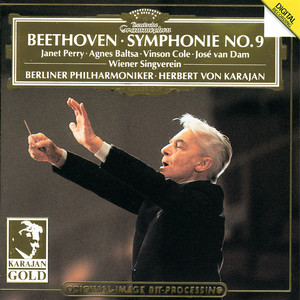
Camera rehearsal for the film of Beethoven's Ninth, 1977. · Siegfried Lauterwasser / Karajan-Archiv
1975
August 11·Salzburg, Großes Festspielhaus

Don Carlo and a winter of illness

Verdi's Don Carlo, staged and conducted by Karajan, opens at the summer festival and will be revived until 1986. In the winter that follows a spinal condition nearly costs him his life and ends in back surgery; he blames a fall from a tree at the age of twelve. He returns to the podium, but the illness never quite leaves him.

Plácido Domingo as Don Carlo, with Isabel and Arabel von Karajan in costume, 1975. · Siegfried Lauterwasser / Karajan-Archiv
Outside the Philharmonie, Berlin 1975. · Siegfried Lauterwasser / Karajan-Archiv
1973
June 9·Salzburg, Großes Festspielhaus

The Whitsun Concerts

Karajan founds the Salzburger Pfingstkonzerte: three orchestral concerts with the Berliner Philharmoniker on the Whitsun weekend, the seed of today's Whitsun Festival. In August he conducts the world premiere of Carl Orff's De temporum fine comoedia at the summer festival, and in November Berlin makes him an honorary citizen.

Filming Tchaikovsky with the Berliner Philharmoniker for Unitel, 1973. · Siegfried Lauterwasser / Karajan-Archiv
1972
June 25·Berlin

The Orchestra Academy and the anthem of Europe

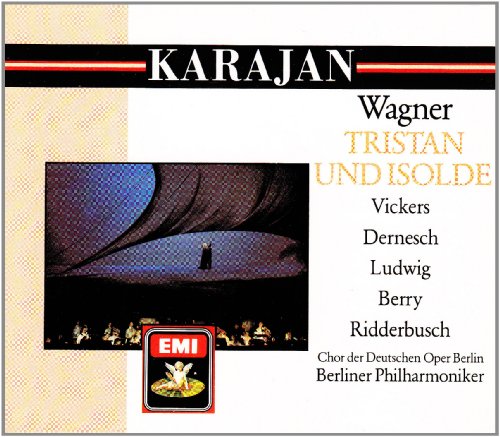
Karajan founds the Orchester-Akademie of the Berliner Philharmoniker, in which young musicians train with members of the orchestra; ten of its scholars join the Philharmoniker in his lifetime. The same year the Council of Europe adopts his arrangement of Beethoven's "Ode to Joy" as the anthem of Europe. At Easter he stages Tristan und Isolde, which he had just recorded in Berlin for EMI.

Showing Jon Vickers Isolde's part at a Tristan rehearsal, Easter 1972. · Siegfried Lauterwasser / Karajan-Archiv
At home in St. Moritz, 1972. · Siegfried Lauterwasser / Karajan-Archiv
1971
March·Salzburg

Fidelio at Easter, Otello in summer

With the Ring complete, Karajan turns the Easter Festival to Beethoven: his Fidelio with Helga Dernesch and Jon Vickers, in which he demonstrates every role to his singers. The summer festival of 1970 had brought his Otello with Vickers and Mirella Freni; in Dresden he records Die Meistersinger with the Staatskapelle, and in Berlin films the Eroica. In 1970 his foundation also launches an international meeting of youth orchestras.

Demonstrating Pizarro's attack at a Fidelio rehearsal, 1971. · Siegfried Lauterwasser / Karajan-Archiv
With Helga Dernesch as Leonore, 1971. · Siegfried Lauterwasser / Karajan-Archiv
Recording Die Meistersinger with the Staatskapelle Dresden, 1970. · Siegfried Lauterwasser / Karajan-Archiv
1969
September 27·Berlin

The first conducting competition

The Herbert von Karajan Foundation holds its first international conductors' competition in Berlin; the Finn Okko Kamu wins. The same year the foundation attaches a research institute for experimental music psychology to the University of Salzburg, and Karajan takes the Berliners to Moscow for the first time. In Salzburg he conducts the Orchestre de Paris, whose musical adviser he has become.

With Okko Kamu, winner of the first competition, Berlin 1969. · Siegfried Lauterwasser / Karajan-Archiv
Recording Franck's Symphony with the Orchestre de Paris, 1969. · Siegfried Lauterwasser / Karajan-Archiv
1968
April 5·Salzburg

Sixty: a foundation, a house in Anif, Beethoven on film

On his 60th birthday Salzburg makes Karajan an honorary citizen, "in particular as founder of the Easter Festival"; the state gives him its ring of honour, Deutsche Grammophon its golden gramophone. He founds the Herbert von Karajan Foundation in Berlin to support young conductors and research into the effects of music, builds his house in Anif south of Salzburg, and films Beethoven's Ninth in Berlin as both conductor and director. At Easter the Ring continues with Das Rheingold.

Eliette and Herbert von Karajan cutting the cake on his 60th birthday. · Siegfried Lauterwasser / Karajan-Archiv
Climbing the camera rig for the film of Beethoven's Ninth, Berlin 1968. · Siegfried Lauterwasser / Karajan-Archiv
Topping-out ceremony for the new house in Anif, 1968. · Siegfried Lauterwasser / Karajan-Archiv
On the wall of the orchestra pit with the Berliner Philharmoniker, Rheingold rehearsal 1968. · Siegfried Lauterwasser / Karajan-Archiv
1967
March 19·Salzburg, Großes Festspielhaus

The Salzburg Easter Festival opens with Die Walküre

Karajan founds, finances and runs his own festival: at Easter the Berliner Philharmoniker come to Salzburg to play one opera and three concerts, the only place where they play opera from the pit. Die Walküre, conducted and staged by Karajan with sets by Günther Schneider-Siemssen, opens the first festival; the Ring is completed over the following three years. In November the same production marks his debut at the Metropolitan Opera in New York, and in May he gives a concert for Pope Paul VI in Rome.

Karajan as Siegmund before the ash tree, Walküre rehearsal 1967. · Siegfried Lauterwasser / Karajan-Archiv
With Gundula Janowitz and Martti Talvela, 1967. · Siegfried Lauterwasser / Karajan-Archiv
The magic fire, Die Walküre 1967. · Siegfried Lauterwasser / Karajan-Archiv
Rehearsing with Jon Vickers and Gundula Janowitz, 1967. · Siegfried Lauterwasser / Karajan-Archiv
January·Munich; Berlin

Carmen on film, and life in Mauerbach

Since 1965 Karajan has been filming his work, first with the French director Henri-Georges Clouzot, then for Cosmotel and Unitel: Schumann's Fourth with the Wiener Symphoniker, Beethoven's Fifth in Berlin, and in 1967 Bizet's Carmen in a Munich studio with Grace Bumbry, in which he appears briefly as a smuggler. The family lives in Mauerbach near Vienna and in St. Moritz. In Berlin he records Beethoven's Missa solemnis, Bruckner's Ninth and Ravel's Boléro.

With Grace Bumbry at the Carmen filming, Munich 1967. · Siegfried Lauterwasser / Karajan-Archiv
As a tobacco smuggler in the Carmen film, 1967. · Siegfried Lauterwasser / Karajan-Archiv
With Eliette, Isabel and Arabel in Mauerbach, 1967. · Siegfried Lauterwasser / Karajan-Archiv
Recording the Missa solemnis with the Berliner Philharmoniker, 1966. · Siegfried Lauterwasser / Karajan-Archiv
1965
July 26·Salzburg, Großes Festspielhaus

Boris Godunov in Salzburg

Karajan stages Mussorgsky's Boris Godunov with Nicolai Ghiaurov in the title role, one of a series of large productions he directs himself in the Großes Festspielhaus: Il trovatore in 1962, Elektra in 1964, Carmen in 1966. In the same year the first talks about an Easter festival of his own begin.

Conducting, 1965. · Siegfried Lauterwasser / Karajan-Archiv

1955 – 1964

Berlin, Vienna, Salzburg

Within two years of Furtwängler's death Karajan holds the three posts that make him the "Generalmusikdirektor of Europe": chief conductor for life of the Berliner Philharmoniker, artistic director of the Salzburg Festival and of the Vienna State Opera. He opens two halls, the Großes Festspielhaus and the Berlin Philharmonie, marries Eliette Mouret and records his first Beethoven cycle for Deutsche Grammophon.

Opening the new Festspielhaus with the Wiener Philharmoniker, Salzburg 1960. · Elfriede Hanak / Karajan-Archiv
1964
May 11·Vienna, Staatsoper

Leaving the Vienna State Opera

After years of friction with the ministry and his co-director Egon Hilbert, Karajan leaves the Vienna State Opera; his last Fidelio performances turn into demonstrations by his supporters. He will not conduct in the house again until 1977. In January his second daughter Arabel is born, with the Berliner Philharmoniker as godparents, and in the summer he joins the directorate of the Salzburg Festival, where he remains until 1988.

Standing ovations in the Musikverein, 1964. · Siegfried Lauterwasser / Karajan-Archiv
With Isabel in St. Moritz, 1964. · Siegfried Lauterwasser / Karajan-Archiv
Conducting Bach from the harpsichord in St. Moritz, 1964. · Siegfried Lauterwasser / Karajan-Archiv
1963
October 15·Berlin, Philharmonie

The Berlin Philharmonie opens with Beethoven's Ninth

Karajan and the Berliner Philharmoniker inaugurate Hans Scharoun's new hall at Kemperplatz, the orchestra in the middle and the audience around it, soon nicknamed "Circus Karajani". Beethoven's Ninth is preceded by a ceremony with Boris Blacher's fanfares. The same month Karajan records Brahms's First and Fourth for Deutsche Grammophon, and in November Carmen in Vienna with Leontyne Price.

Moving into the new Philharmonie: setting up the orchestra, 1963. · Siegfried Lauterwasser / Karajan-Archiv
Eliette von Karajan with Isabel, 1963. · Siegfried Lauterwasser / Karajan-Archiv
1962
November·Berlin, Jesus-Christus-Kirche

The Beethoven cycle for Deutsche Grammophon

In the church in Dahlem that serves as the orchestra's recording studio, Karajan completes the nine Beethoven symphonies with the Berliner Philharmoniker, begun in 1961. Released as a boxed set in 1963, the first conceived and sold as a cycle, it sells a million copies within a decade and makes the conductor and his orchestra the best-known in the world. In Vienna he stages Fidelio and records Tosca for Decca; in summer he visits Bayreuth as a guest.

At the mixing desk during a live recording, Vienna 1962. · Siegfried Lauterwasser / Karajan-Archiv
With Günther Schneider-Siemssen, Wieland Wagner and Walter Legge in Bayreuth, 1962. · Siegfried Lauterwasser / Karajan-Archiv
Jon Vickers and Christa Ludwig in Fidelio, Vienna 1962. · Siegfried Lauterwasser / Karajan-Archiv
1961
September·Vienna

Vienna years: Decca, the Festwochen, the Planets

Alongside Berlin, Karajan records with the Wiener Philharmoniker for Decca in the Sofiensaal: Also sprach Zarathustra, Aida, Die Fledermaus and, in September 1961, Holst's The Planets. At the Wiener Festwochen he conducts before Nina Khrushcheva and David Oistrakh. In the autumn of 1959 he had taken the Wiener Philharmoniker on a world tour through India, the Philippines, Japan and the United States.

Nina Khrushcheva greets Herbert and Eliette von Karajan after a Festwochen concert, Vienna 1961. · Elfriede Hanak / Karajan-Archiv
Rehearsing with the Wiener Philharmoniker in the Musikverein, 1959. · Elfriede Hanak / Karajan-Archiv
1960
July 26·Salzburg

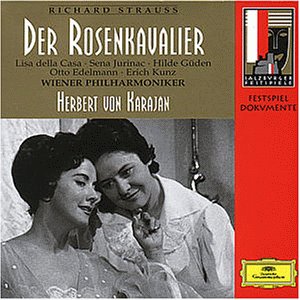
The Großes Festspielhaus opens with Der Rosenkavalier

Clemens Holzmeister's new Festspielhaus, built into the Mönchsberg with a stage of unprecedented width, opens with Richard Strauss's Der Rosenkavalier under Karajan, who had pressed for the hall and shaped its auditorium. His contract as the festival's artistic director runs out in the autumn, but as conductor and director he remains its dominant figure. A month earlier his first daughter Isabel was born; the Wiener Philharmoniker are her godparents.

Seated rehearsal for Der Rosenkavalier in the new hall, 1960. · Siegfried Lauterwasser / Karajan-Archiv
The house in Anif where the Karajans lived during the festival season, 1960. · Elfriede Hanak / Karajan-Archiv
1958
October 6·Mégève

Marriage to Eliette Mouret

After his divorce from Anita, Karajan marries Eliette Mouret, a model from Nice he had met on the Riviera the year before; she will share the remaining thirty years of his life and later found the Institute that bears both their names. The same month he signs a five-year contract with Deutsche Grammophon whose first project is the Beethoven symphonies. In May he had conducted the Wiener Philharmoniker on Austria Day at the World's Fair in Brussels.

Herbert and Eliette von Karajan in Salzburg, 1958. · Elfriede Hanak / Karajan-Archiv
With the Wiener Philharmoniker at the Brussels World's Fair, 1958. · Elfriede Hanak / Karajan-Archiv
1957
April 2·Vienna, Staatsoper

Director of the Vienna State Opera

Karajan opens his directorship with Die Walküre, which he both conducts and stages, the first of many productions of his own. He brings in international singers, performs Italian operas in the original language and exchanges ensembles with La Scala. In the autumn he takes the Berliner Philharmoniker to Japan for the first time; in April he records Bruckner's Eighth with them for EMI.

Rehearsing with the Wiener Symphoniker, May 1957. · Elfriede Hanak / Karajan-Archiv
Directing Otello at the Vienna State Opera, with Mario del Monaco, 1957. · Elfriede Hanak / Karajan-Archiv
1956
June 13·Vienna; Salzburg; Berlin

"Generalmusikdirektor of Europe"

The day after La Scala's guest performance of Lucia di Lammermoor with Maria Callas at the Vienna State Opera, Karajan's appointment as its artistic director is announced. In March he had signed as artistic director of the Salzburg Festival; in Berlin his contract as chief conductor is made "for life". With the Philharmonia Orchestra in London he records Falstaff, Der Rosenkavalier with Elisabeth Schwarzkopf and Strauss's Four Last Songs.

Getting out of his gullwing Mercedes, Salzburg 1956. · Elfriede Hanak / Karajan-Archiv
Reception for the Berliner Philharmoniker at the Wiener Festwochen, 1956. · Elfriede Hanak / Karajan-Archiv
1955
March 1·New York, Carnegie Hall

The American tour and the succession to Furtwängler

When Wilhelm Furtwängler died on 30 November 1954, Berlin asked Karajan to take over the Philharmoniker's first tour of the United States, which he accepted on the understanding that he would succeed him. The tour opens in Washington and reaches Carnegie Hall on 1 March amid protests over his Nazi past. In April, on his 47th birthday, the orchestra elects him chief conductor and artistic director. In the autumn he tours America again, with the Philharmonia.

With Rudolf Bing, general manager of the Metropolitan Opera, New York 1955. · Siegfried Lauterwasser / Karajan-Archiv

1946 – 1954

The return

After the war Karajan is banned from public performance because of his Nazi party membership. Walter Legge keeps him recording in Vienna for EMI, and once the ban is lifted the comeback is swift: Vienna, Lucerne, La Scala, London's new Philharmonia Orchestra, Bayreuth. By 1954 he is the most recorded conductor of his generation.

Bayreuth, 1952. · Siegfried Lauterwasser / Karajan-Archiv
1953
April·Vienna

Bach in Vienna, Tchaikovsky in London

As chief conductor of the Wiener Symphoniker and head of the Singverein, Karajan performs Bach's Passions and records the Mass in B minor for EMI. In London the Philharmonia Orchestra, which Legge built around him from 1948, has become his principal recording orchestra: Tchaikovsky, Sibelius, and between 1951 and 1955 his first complete Beethoven cycle.

Rehearsing Bach's St Matthew Passion with the Wiener Philharmoniker, 1953. · Elfriede Hanak / Karajan-Archiv
1952
July 23·Bayreuth, Festspielhaus

Tristan opens Bayreuth, his last appearance there

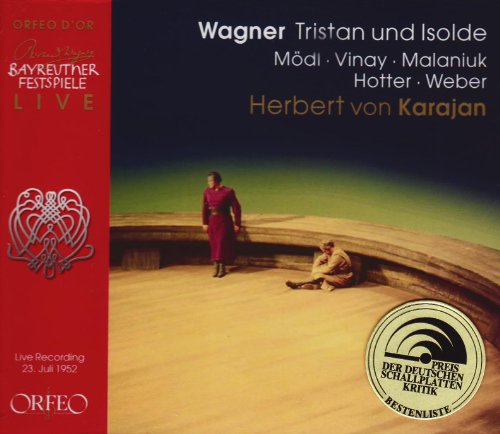
Karajan conducts Wieland Wagner's new Tristan und Isolde with Martha Mödl and Ramón Vinay, which opens the 1952 festival. It is his last appearance on the Green Hill: incompatible ideas about staging, and his growing commitments elsewhere, keep him from returning. In May he had made his debut with the Philharmonia at the Royal Festival Hall in London.
With Martha Mödl, Wieland Wagner and his daughter Iris at a Tristan rehearsal, Bayreuth 1952. · Siegfried Lauterwasser / Karajan-Archiv
With the Tristan score, 1952. · Siegfried Lauterwasser / Karajan-Archiv
1951
58 Concerts → 16 recordings
August 5·Bayreuth, Festspielhaus

Bayreuth: Die Meistersinger and the Ring

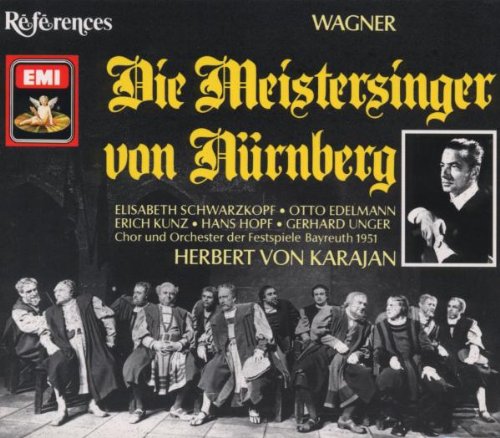
At the first post-war Bayreuth Festival under Wieland and Wolfgang Wagner, Karajan conducts Die Meistersinger von Nürnberg, recorded live by EMI, and the second cycle of the Ring in Wieland Wagner's austere new production, with Astrid Varnay, Martha Mödl and Hans Hopf. His contract gives him the entire musical preparation of singers and orchestra.

1950
50 Concerts → 10 recordings
November·Vienna

Mozart operas for EMI

With the Wiener Philharmoniker and the singers of the Vienna ensemble, Karajan records Le nozze di Figaro and Die Zauberflöte for EMI, the first of his many complete opera recordings. After the 1949 festival he had withdrawn from Salzburg for a while; the summers are now spent in Lucerne, where he also teaches conducting.

1948
47 Concerts → 26 recordings
August 25·Vienna; London; Salzburg; Lucerne; Milan

1948: the year of the comeback

The Gesellschaft der Musikfreunde makes Karajan its concert director, with a cycle of his own with the Wiener Symphoniker and the direction of the Singverein for life. In April he conducts the Philharmonia Orchestra in London for the first time, in August Gluck's Orfeo ed Euridice and Mozart's Figaro at the Salzburg Festival and his first concert at the Lucerne Festival, where he will return nearly every summer until 1988. In December Figaro, on a guest visit of the Vienna State Opera, is his operatic debut at La Scala.

1947
7 Concerts → 21 recordings
October 26·Vienna, Musikverein

The ban is lifted: Bruckner's Eighth

After the Allied authorities lift his performance ban, Karajan returns to public concert life with Bruckner's Eighth and the Wiener Philharmoniker in the Musikverein. In the same weeks he records for EMI, with Legge producing, Brahms's German Requiem, Strauss's Metamorphosen and Beethoven's Ninth. The clearance does not apply to Germany, where a Munich engagement planned for 1948 falls through.
1946
2 Concerts → 17 recordings
January 12·Vienna, Musikverein

First post-war concerts, then the ban

Cleared by the American authorities in December 1945 on the strength of his own account of his party membership, Karajan conducts the Wiener Philharmoniker in the Musikverein. A week later he meets Walter Legge, producer at EMI's Columbia label and founder of the Philharmonia Orchestra, who becomes the most important partner of the next decade. In March the Soviet authorities ban him from public appearances; he records for Legge, studies scores and works anonymously at the Salzburg Festival.

1935 – 1945

Aachen and Berlin

Germany's youngest Generalmusikdirektor conducts the Berliner Philharmoniker for the first time on his thirtieth birthday, and a Tristan at the Berlin State Opera makes him famous overnight as "das Wunder Karajan". The rise takes place inside the Nazi state, whose party he has joined; it ends in 1945 in Italy, waiting for the war to finish.

Berlin, 1940. · Siegfried Lauterwasser / Karajan-Archiv
February 18·Berlin

The last wartime concert, flight to Italy

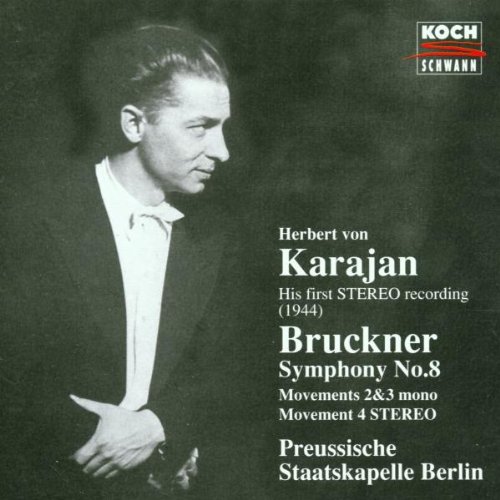
Karajan conducts the Staatskapelle for the last time in Berlin, then flies with his wife to Milan and waits out the end of the war there and at Lake Como, studying scores. In 1944 he had made one of the first experimental stereo recordings, the finale of Bruckner's Eighth, for Berlin radio, and had been placed on the "Gottbegnadeten" list that exempted artists from military service.

1942
35 Concerts → 9 recordings
October 22·Berlin

Leaving Aachen; marriage to Anita Gütermann

Karajan's Aachen contract ends in the spring, and in June the Berlin State Opera does not renew his opera contract; he keeps the symphony concerts of the Staatskapelle until 1944 and records Mozart symphonies in Turin. Divorced from Elmy Holgerloef, he marries Anita Gütermann, heiress of the sewing-thread firm, whose Jewish grandparent makes the marriage a liability under the regime.

1940
February 18·Berlin, Staatsoper

Elektra before Richard Strauss

For the composer's 75th birthday season Karajan conducts a new production of Elektra at the State Opera in the presence of Richard Strauss. As Staatskapellmeister he is also sent abroad for German cultural propaganda: to Paris with the Aachen choir and orchestra in December 1940 and with the State Opera in May 1941, to Rome, Madrid, Amsterdam and Bucharest.

With Richard Strauss and Heinz Tietjen, 1941. · Siegfried Lauterwasser / Karajan-Archiv
Conducting in Aachen, 1940. · Siegfried Lauterwasser / Karajan-Archiv
1938
39 Concerts → 1 recordings
December 9·Berlin

The first recording

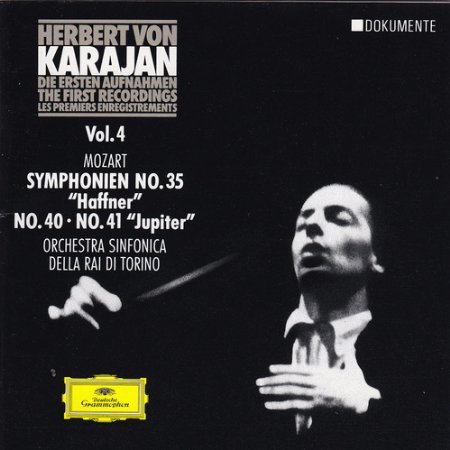
Karajan signs his first record contract with Deutsche Grammophon and records the overture to Mozart's Die Zauberflöte with the Staatskapelle Berlin, the first of more than 800 recordings. Tchaikovsky's Pathétique with the Berliner Philharmoniker follows in 1939. In April 1939 Hitler confers on him the title Staatskapellmeister, which puts the Staatskapelle's symphony concerts in his hands.

October 21·Berlin, Staatsoper

"Das Wunder Karajan"

Three weeks after his debut at the State Opera with Fidelio, Karajan conducts Tristan und Isolde from memory. The next day the critic Edwin von der Nüll hails him in the B.Z. am Mittag under the headline "Das Wunder Karajan", a review probably encouraged by Generalintendant Heinz Tietjen as a move against Furtwängler. In November Göring engages him for the State Opera while he remains Generalmusikdirektor in Aachen.

April 8·Berlin, Alte Philharmonie

First concert with the Berliner Philharmoniker

On his 30th birthday Karajan conducts the Berliner Philharmoniker for the first time, as a guest: Mozart's Symphony No. 33, Ravel's Daphnis et Chloé and Brahms's Fourth. The orchestra's own history calls the evening a sensation, and the beginning of Wilhelm Furtwängler's lifelong jealousy. In July he marries the operetta singer Elmy Holgerloef in Aachen.

With the Staatskapelle in Berlin, 1940. · Siegfried Lauterwasser / Karajan-Archiv
April·Aachen, Stadttheater

Germany's youngest Generalmusikdirektor

Engaged in Aachen in 1934 after a trial performance, Karajan becomes Generalmusikdirektor of the Stadttheater and the municipal concerts at 27, the youngest in Germany, with a large orchestra and chorus at his disposal for the first time. He conducts Tannhäuser for Hitler's birthday in April 1935 and choral works for the party's district rally in June; the post is the foundation of his career inside the Nazi state.

The Städtisches Orchester Aachen. · Siegfried Lauterwasser / Karajan-Archiv

1927 – 1934

Apprentice years

A concert his father pays for brings the student an engagement at the small Stadttheater in Ulm, where for five years he learns the whole repertoire for 150 marks a month, rehearsing in front of a mirrored wardrobe. The summers belong to Salzburg: conducting courses at the Mozarteum, a festival debut, a first encounter with the Wiener Philharmoniker. In 1933 he joins the Nazi party.

With colleagues in front of the theatre in Ulm, 1932. · Siegfried Lauterwasser / Karajan-Archiv
August 21·Salzburg

First encounter with the Wiener Philharmoniker

At a private soirée during the festival, partly in the open-air theatre of the Mirabell Gardens, Karajan conducts the Wiener Philharmoniker for the first time, in Debussy and Ravel. His Ulm contract has run out; in June a trial performance in Aachen brought him the post of first Kapellmeister there.

With colleagues from Ulm, 1934. · Siegfried Lauterwasser / Karajan-Archiv
April 8·Salzburg; Ulm

Joining the NSDAP

Karajan joins the Nazi party in Salzburg, weeks before it is banned in Austria, and is registered again in Ulm with a second membership number dated 1 May 1933. After the war he claimed to have joined only in 1935, under pressure in Aachen; the party files contradict this. The membership furthered his career in Germany and cost him a two-year performance ban after 1945.

Herbert von Karajan in the Nazi era (City of Salzburg, PDF)

August·Salzburg; Bayreuth

Summer courses and a visit to Bayreuth

For three years Karajan directs the international conducting courses of the Mozarteum in the summer. In August 1931 he hears Toscanini conduct Parsifal and Tannhäuser in Bayreuth, an experience he counts among the decisive ones of his youth.

New Year's Eve concert in Ulm with Max Kojetinsky and Otto Schulmann, 1931. · Siegfried Lauterwasser / Karajan-Archiv
March 2·Ulm, Stadttheater

Figaro in Ulm, Salome in Salzburg

A guest performance of Le nozze di Figaro at the Stadttheater Ulm brings the engagement as first Kapellmeister from the autumn. In April he conducts his first opera in the Salzburg Festspielhaus, Strauss's Salome. In Ulm he conducts everything from Rigoletto to Lohengrin, plays football in goal for the theatre team and tennis in Salzburg.

In goal for the Stadttheater team, Ulm 1932. · Siegfried Lauterwasser / Karajan-Archiv
On the tennis court in Salzburg, 1929. · Siegfried Lauterwasser / Karajan-Archiv
January 22·Salzburg, Mozarteum

The conducting debut

For an "extraordinary symphony concert" in the great hall of the Mozarteum his father hires the Mozarteum Orchestra: Tchaikovsky's Fifth, a Mozart piano concerto and Strauss's Don Juan. The Salzburg press calls it a small sensation, and the director of the Stadttheater Ulm, who is in the audience, invites him to a trial performance. A month earlier he had conducted Rossini's William Tell overture in a student concert in Vienna.

September·Vienna

Engineering, then music

After the Matura at the Salzburg Gymnasium, with a thesis on thermodynamics and combustion engines, Karajan enrols at the Technische Hochschule in Vienna for mechanical engineering, and at the Academy of Music: piano with Josef Hofmann, conducting with Alexander Wunderer and Franz Schalk. The engineer's interest in machines, cars, aeroplanes and recording technology never leaves him.

1908 – 1926

A Salzburg childhood

Herbert von Karajan is born in Salzburg, the son of a surgeon who plays the clarinet, into a family of Greek-Macedonian origin ennobled in the eighteenth century. The piano comes first; at the Mozarteum Bernhard Paumgartner turns the prodigy towards conducting.

Herbert (left) and his brother Wolfgang with their nanny, around 1915. · Siegfried Lauterwasser / Karajan-Archiv
January 26·Salzburg, Mozarteum

First public appearance, as a pianist

At a Mozart celebration of the conservatory, conducted by Bernhard Paumgartner, the ten-year-old plays Mozart's Concert Rondo in D major. Since 1916 he has studied at the Mozarteum: piano with Franz Ledwinka, harmony with Franz Sauer, composition and chamber music with Paumgartner, who encourages him to conduct.

1908
April 5·Salzburg

Born in Salzburg

Heribert von Karajan is born as the second son of Dr Ernst von Karajan, head of surgery at the St. Johanns-Spital, and his wife Martha, née Kosmač. The family descends from the merchant Georg Karajan, who came to Vienna from Kozani in Macedonia in 1767; his great-grandfather Theodor Georg von Karajan was a philologist and president of the Academy of Sciences. The piano lessons begin at the age of four.

His father, Dr Ernst von Karajan, around 1925. · Siegfried Lauterwasser / Karajan-Archiv
His mother, Martha von Karajan, 1925. · Siegfried Lauterwasser / Karajan-Archiv
His great-grandfather Theodor Georg von Karajan, around 1860. · Siegfried Lauterwasser / Karajan-Archiv

The story begins here.

Dates and facts follow the chronicle of the Karajan Archive, the Karajan Institute's published biography and the Archive's concert and recording databases.

Back to the end

Stay Informed

Subscribe to our newsletter for the latest Karajan-related news.